Eleven miles west of our Chardon yard, on the most heavily wooded side of Geauga County.
Chesterland sits in the northwest corner of Geauga County — Chester Township, about eleven miles from our yard in Chardon, and the first place the county starts to feel like the Cleveland suburbs. It’s also one of the most heavily wooded places we work.
The lots are the reason. One to five acres, most of them carved out of standing woods rather than cleared farmland, so the houses were dropped in among mature oak, sugar maple, black cherry, and American beech instead of having trees planted around them afterward. That’s a fine place to live and a complicated place to take a tree down. There’s rarely a clean drop zone, the trees you’re keeping are worth real money, and the driveway is usually the only way in.
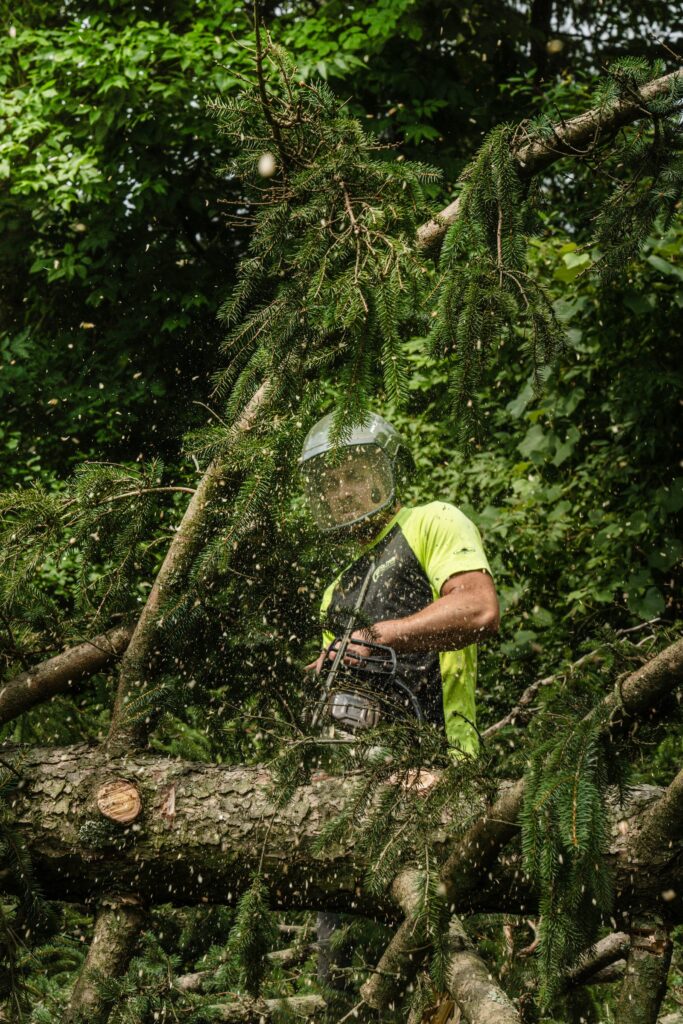
So most Chesterland removals get dismantled rather than felled — roped down in sections so nothing lands on what you wanted to keep. When a tree is too dead or too tall to climb safely, the crane reaches about a hundred feet from the driveway and lifts it out in pieces with nobody in the canopy.
This is also Chagrin River country. The watershed’s ravines and wet ground mean saturated soil after a hard rain, and a saturated root plate is how a healthy-looking tree ends up on its side. If yours already has, that’s an emergency call. Otherwise trimming and removal both run out of the same Chardon yard, and we’re doing tree work in Chagrin Falls and tree service in Chardon constantly.
Wooded acreage is its own category of tree work. These are the five things that decide how a job here gets planned.
Tall, narrow trees that grew up in a stand have small root plates and little taper. They were fine in the woods; they're exposed once the lot is cleared around them.
Chagrin River watershed soil stays wet. A saturated root plate plus a west wind is how a sound-looking tree goes over.
Northeast Ohio beech are thinning and dying back. Chesterland has a lot of beech, and a lot of it is now standing deadwood.
A long wooded drive decides what equipment can reach the tree. We plan the access before we quote the job, not on the day.
Ash killed by emerald ash borer years ago is brittle now. Dead ash gets climbed differently, or not at all.
The things that actually come up on a wooded Chesterland lot.
Chester Township is unincorporated, so there’s no village tree ordinance to clear for a tree standing on your own property. What can still apply: trees in the county road right-of-way, anything inside a utility easement, and the deed restrictions or conservation easements attached to some of the newer wooded developments here. If your tree is near the road or you know there’s an easement on the parcel, say so and we’ll check before we schedule.
Usually — and if we can’t, we’ll tell you at the estimate rather than on the day. Our chip trucks and loaders handle a normal gravel drive fine. The judgment calls are soft ground in spring, low limbs over the drive, and turning room at the top. Where a drive genuinely won’t take a truck, the crane often solves it by reaching the tree from further back.
Depends how far along it is. Beech leaf disease has been moving through Northeast Ohio for over a decade and there’s nothing a homeowner can spray that reverses it. Early on, a thinning canopy is worth watching. Once the upper crown is bare and the branch tips are dead, the tree is standing deadwood, it goes brittle quickly, and it becomes a removal before it starts shedding limbs on its own schedule.
Protecting them is most of the work on a lot like this. Removals here come down from the top and get roped, not dropped, precisely because there’s something worth keeping under every drop zone. We also plan where the truck sits and where brush gets dragged — on a wooded lot the damage usually happens to the understory, not to the big trees.
We'll walk it with you and tell you what it actually needs. Text or call (440) 636-2276 for a free estimate.