A forestry mulcher clears unwanted underbrush and organic material, grinding everything into a fine mulch that's spread throughout the area. Great for taking back overgrown areas of a yard or cleaning up woods and tree lines.
Forestry mulching clears and cleans up in the same pass — no piles, no burning, no hauling.
A mulching head grinds brush, saplings, and small trees where they stand — clearing and cleanup happen at once.
Material is mulched in place, so there are no burn piles or loads of debris to haul off your property.
The mulch layer stays put, shielding bare ground from runoff and holding your topsoil in place.
As the mulch breaks down it returns nutrients to the ground and helps hold moisture.
We take out the overgrowth and invasives you want gone while leaving the healthy trees worth keeping.
Perfect for opening up trails, fence lines, food plots, and access lanes across your land.
Traditional clearing means a bulldozer, burn piles, and days of cleanup. Forestry mulching does it all in one step: a purpose-built mulching head grinds brush, saplings, and small trees into a clean layer of wood mulch, right where they stand.
That means no stumps left behind, no debris piles, and no scorched earth. The mulch that’s left protects the soil from erosion, holds moisture, and breaks down to feed whatever you plant next.
It’s the smart choice for overgrown lots, fence lines, trails, food plots, and knocking back invasive species — and because there’s no hauling or burning, it’s faster and easier on your property. Most of it happens on Middlefield’s farm ground and fence lines, and we run it out of our yard in Chardon, covering all of Northeast Ohio.
For heavier work we have the equipment too, whether that’s full lot and land clearing or stump grinding once the big trees are down.
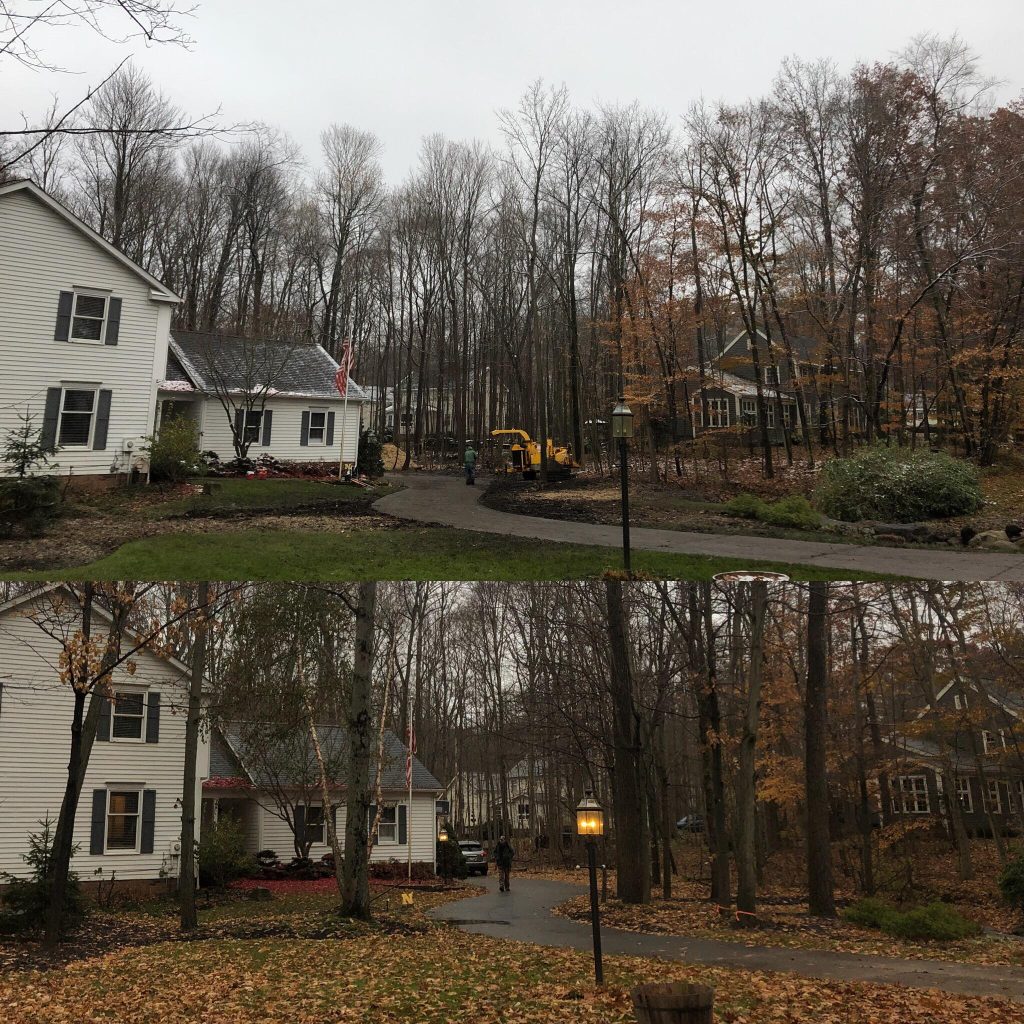
How mulching actually works, and where it's the right tool for the job.
A dozer pushes everything into piles that then have to be burned or hauled, and it strips and churns the topsoil doing it. A mulching head grinds the material where it stands and leaves it on the ground as mulch. One pass, no piles, no burn permit, no trucks in and out — and the soil structure stays intact underneath.
Brush, saplings, briars, and small trees go down in a single pass — that covers most overgrown ground. Mature trunks are a different job: we fell those with the clearing crew and process them separately. Walk the property with us and we’ll tell you which parts are a mulching job and which parts aren’t.
The head takes material down at ground level, so you’re not left with a field of cut-off stumps to catch a mower deck. What it doesn’t do is take a stump out below grade. If you’re planting, paving, or building on a specific spot, that one needs stump grinding instead.
Nothing, in most cases. The layer shields bare ground from runoff, holds moisture, and breaks down over the following seasons to feed whatever grows next. If you’re seeding right away, thinner is better and we can adjust how much material we leave in the areas you plan to plant.
It knocks them back hard, but be realistic: honeysuckle, autumn olive, and multiflora rose all resprout from the root. Mulching gives you a clean slate and access you didn’t have before, which is exactly what makes follow-up treatment practical. Plan on a second pass or a targeted herbicide program the following season if you want them gone rather than just flattened.
Often, yes. Tracked equipment spreads its weight and leaves a mulch layer behind it, so it’s considerably gentler on soft ground than wheeled machines pushing piles around. There’s still a limit — genuinely saturated ground is worth waiting out rather than rutting up. We’ll look at the site and tell you if it’s a job for a drier week.
Overgrown lot, fence line, or trail? Text or call (440) 636-2276 for a free forestry mulching estimate.